 Longform · Apr 28, 2026
The liberated oppressor
Paulo Freire warned that the oppressed, in their urgency to be free, often want nothing more than to switch seats. Organizations are full of this pattern. One team wins the territory it fought for, and immediately begins defending it like the empire it replaced.
 027
027 7 min
7 min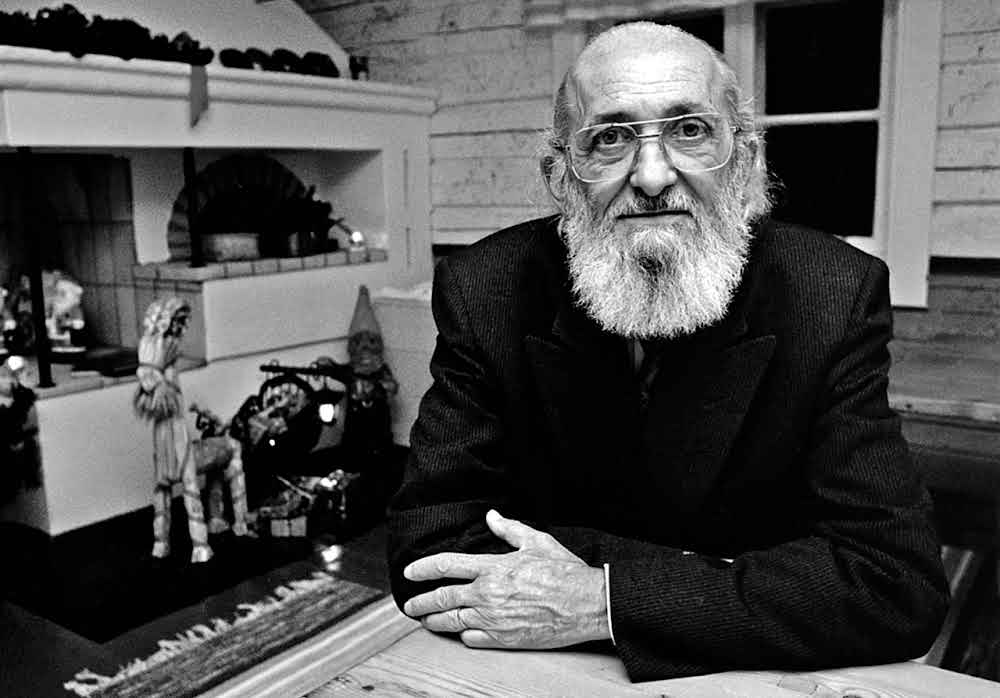
Paulo Freire opens Pedagogy of the Oppressed with an observation that is uncomfortable enough to get misquoted or summarized away: the oppressed do not want to abolish oppression. They want a turn. "Their ideal is to be men," he writes, "but for them, to be men is to be oppressors." The humanity they have been denied looks, from inside dehumanization, identical to the humanity of the one doing the denying. So the first aspiration is not justice but inversion. The pattern is recognizable far outside the political contexts Freire was describing. It shows up in product organizations, in agency structures, in any bureaucracy where some teams have power over other teams and everyone has, at some point, been the one without it.
The typical corporate version runs like this. A team has been downstream for years. They wait on other teams for approvals, for data, for access to infrastructure they did not build and cannot modify. They make their case in quarterly reviews and lose priority to louder rooms. They develop a vocabulary for this situation — blocked, dependent, not in scope for us — and a set of rituals to cope with it: workarounds, shadow systems, backchannels, escalation chains they use sparingly to preserve the relationships that keep the workarounds running. Over time they build a persuasive account of their own marginalization. They are right. The account is accurate. And then they win.
They win budget, headcount, a mandate from senior leadership that is finally unambiguous. They build the platform they were denied. They become, in the language of the reorganization memo, the owners of the capability they used to wait for. And then, quietly and without planning it, they begin doing exactly what was done to them. Approvals sit in their backlog. Requests are prioritized against their own roadmap, not the requestor's urgency. The teams that depend on them develop workarounds, shadow systems, backchannels. The vocabulary migrates.
Freire's mechanism
Freire's explanation for this is not cynical. He is not arguing that the oppressed are secretly hypocrites. He is arguing that oppression, as a system, colonizes the imagination of everyone inside it — including those it harms most. If the only model of power you have ever witnessed is vertical, domination-shaped, and territorial, then power will look like that when you reach for it. The aspiration is formed inside the system you want to escape, so it tends to reproduce the system's shape. "The oppressor consciousness," he writes, "tends to transform everything surrounding it into an object of its domination." Once you have power, the objects multiply: the roadmap, the data, the platform, the API surface, the release process. Ownership is not incidental. It is the form that power takes when the only available template is the one you inherited.
The liberating alternative Freire proposes is not role reversal but what he calls conscientização — critical consciousness, a reflexive awareness of how the system has shaped you, including your desires. Without it, liberation is just rotation. You turn the wheel; the structure stays.
Adler's problem with the vertical
Alfred Adler arrived at a compatible diagnosis from a different direction. Where Freire was studying structural oppression in Brazilian peasant communities, Adler was studying individual psychology in early twentieth-century Vienna. But the core insight converges. Adler identified what he called Gemeinschaftsgefühl — community feeling, or social interest — as the necessary condition for psychological health and productive social life. Its opposite was the compensatory will to power: the use of superiority, control, and domination to manage an underlying sense of inadequacy or threat.
Adler's key move is to distinguish vertical striving from horizontal striving. Vertical striving is the drive to be above — to secure status relative to others, to be better, more important, more essential. It is inherently zero-sum: my superiority requires your inferiority. Horizontal striving, by contrast, is the orientation toward contribution — toward being useful within a shared project, without requiring that the relationship be ranked. Adler saw vertical striving as a compensation, not a strength: the desire to be over others is a symptom of failing to feel securely among them.
The organizational application is direct. A team that fights for ownership is usually fighting vertically. The resource they are claiming — the platform, the data, the approval gate — gives them height relative to the teams that need it. The fight itself feels righteous because the previous distribution was unjust. But the solution arrived at, ownership-as-elevation, is the same vertical instrument used against them. Nothing horizontal has been built.
What owning X teaches you about owning Y
There is a second-order version of this problem that organizations rarely name. When Team A wins ownership of X — the data pipeline, the design system, the infrastructure provisioning — it has also written a template that teaches Team B how to fight for ownership of Y. Team B was watching. It saw that ownership is available, that the fight can be won, and that winning produces safety, resources, and influence. Team B is not wrong. It learned the correct lesson from the available evidence.
The result is a territorial proliferation. Each team that secures its domain produces the conditions that make the next team's territorial ambition legible and rational. The org chart does not prevent this; it formalizes it. The boxes and lines that describe reporting structure describe, beneath the surface, a map of contested and settled territories. Reorganizations — which come with the stated intention of improving collaboration — usually just redraw the map. They leave the territorial logic untouched and sometimes intensify it, because freshly redrawn borders create new adjacency disputes.
What never changes in any of this is the underlying grammar. The subject owns the object. The owner has power over non-owners. The non-owner's recourse is to become an owner. This is the grammar Freire was trying to disrupt with conscientização and Adler was trying to disrupt with Gemeinschaftsgefühl. Both of them, in different registers, were arguing that the problem is not who has the power but what the power is shaped like.
What horizontal looks like when it is not just a value
The word collaboration appears in every org culture deck. It is positioned as a value, which means it lives in the space between aspiration and accountability — visible enough to be cited, distant enough never to be falsified. Teams that collaborate poorly do not, typically, fail a collaboration audit. They fail delivery timelines, miss stakeholders, create escalations. The collaboration failure is re-described as a process failure or a resourcing failure, and the fix proposed is usually more process or more resourcing. The territorial grammar is not touched.
Adler's horizontal striving implies something structurally different. The question is not "who owns this?" but "what does this need, and who is best placed to contribute it?" The two questions produce different incentive shapes. Ownership concentrates authority; contribution distributes it. Ownership makes the owner's interests structurally primary; contribution makes the work's needs structurally primary. Ownership creates natural opponents — everyone whose work touches mine is a potential border dispute; contribution creates natural partners — everyone whose work touches mine is a potential integration.
The practical conditions that allow horizontal collaboration to survive in organizations are not soft. They are architectural. Incentive structures that reward team output over territorial influence. Funding models that do not require owning a platform to justify a budget. Decision rights that are attached to decisions rather than to org positions. Information flows that do not require crossing ownership borders to access what teams need. None of these are achieved by writing collaboration into a value statement.
The consciousness problem
Freire's deepest point, and the one most relevant here, is that structural change is not sufficient without the critical consciousness that makes it sustainable. An organization can redesign its incentive structures and still reproduce territorial behavior, because the people inside it have been shaped by years of the previous system and carry its logic in their habits, their emotional responses, their intuitions about how power works and what safety feels like.
The team that was downstream for three years and is now a platform team did not lose its memory when it won the mandate. The leaders who praised collaboration while running territorial org models did not stop modeling what they modeled. The junior employees watching both of them are forming their pictures of how organizations work and what it looks like to succeed inside them. This is Freire's colonization of the imagination, running in real time, in a Tuesday all-hands.
Conscientização in an organizational context would require something unusual: the willingness to examine not just what we do but why it feels right when we do it. Why does owning the platform feel like security rather than responsibility? Why does another team's dependence on us feel like leverage rather than obligation? Why does the request to share decision rights feel threatening rather than like a relief from overextension? The answers will usually point to the same place: because the system we learned in taught us that height is safety, and we have not yet learned another way to feel safe.
That learning is slower than a reorg and harder to put in a deck. It requires something like what Adler prescribed — a genuine reorientation from vertical to horizontal, from the question of who is above whom to the question of what we are together trying to build. Teams that manage it rarely announce it. They are too busy working.
References: Freire, Paulo. 1968. Pedagogia do Oprimido. Rio de Janeiro: Paz e Terra. — Adler, Alfred. 1927. Understanding Human Nature. New York: Greenberg. — Adler, Alfred. 1938. Social Interest: A Challenge to Mankind. London: Faber & Faber.
Back to Writing